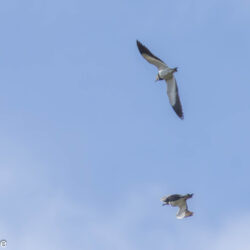
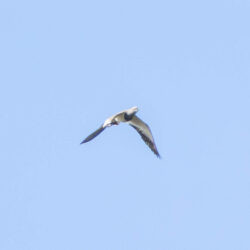
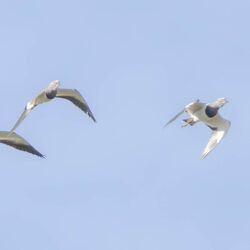
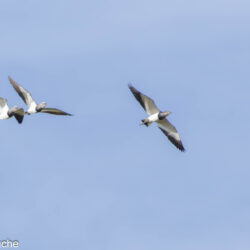
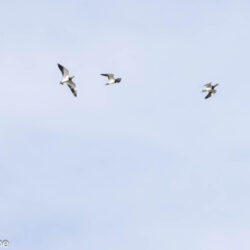
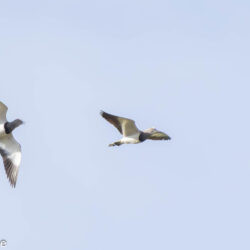
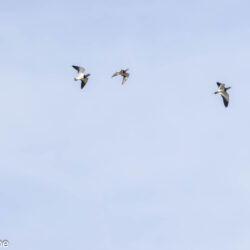
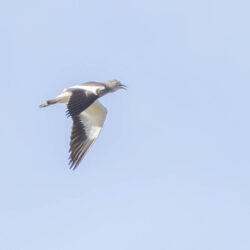
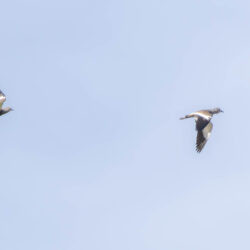
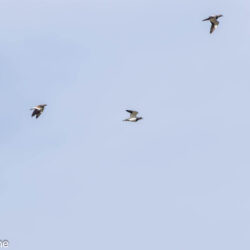
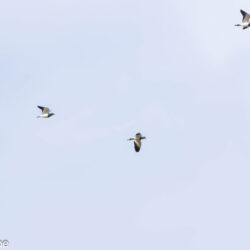
The Black-winged Lapwing is a striking and elegant plover that adds excitement to birding outings in certain parts of South Africa. My observations come primarily from field trips in the area between Rondevlei and Bergplaas, where the farmland features rotating crops. This creates a dynamic, short-grass habitat that suits several sought-after species in our region, including Black-winged Lapwing, Denham’s Bustard, Spur-winged Goose, and other local specials.

Spotting Black-winged Lapwing on these trips is always a highlight. When the grass is short, these birds are relatively easy to locate if they are present in the area. As crops grow taller or the grass lengthens, they quickly become hidden in the vegetation and seem to vanish.
The best approach is to remain in the vehicle when you spot them. Approaching on foot often causes them to move farther away, just out of good viewing range, before disappearing into slightly taller grass. If disturbed and they take off, they usually become vocal, making identification much easier in flight. They sometimes overlap in distribution with the more common Crowned Lapwing, which can make distant identification tricky. At close range, however, separation is straightforward: Crowned Lapwing appears paler brown above, with a distinctive black-and-white (not grey) crown, and white primary coverts (not black).
These common residents are mostly nomadic. Outside the breeding season, they gather in flocks ranging from 3 to 80 birds. Their main food source is termites, but they also take ants, grasshoppers, spiders, flies, molluscs, small fish, and earthworms.
They fall prey to species such as Lanner Falcon and African Marsh Harrier.
Migration occurs by both night and day. They move to heavily grazed areas when grass becomes too long in late summer and leave breeding areas during dry summer months. They return rapidly after heavy rainfall, suggesting movements are not over long distances. Males typically arrive back at breeding grounds before females.
Males grow increasingly aggressive about three months before egg-laying. They are territorial: the male defends a small breeding territory by calling continuously from an elevated mound and performing circular display flights about 50 m above the territory. Territorial defence includes stretching and bobbing the whole body backwards while flicking the tail downward. An intruder may respond by raising wings and head, then signal submission with a sideways tail-flick.
During courtship, intruding males are repelled by a “Rodent-run” threat display, where the territory owner runs at the intruder with neck retracted, feathers raised, and wings slightly drooped. The intruder signals defeat by ducking the head and raising a partly folded wing away from the aggressor, or by half-lifting both wings and jumping 20–30 mm. The circular display flight (also used for mate attraction) features deep, exaggerated wingbeats (Butterfly display) and rocking the body from side to side (Alternating display). The female selects a mate by joining the male in this display flight, flying a few metres behind him. The pair then lands, with the male still calling. The female approaches closely, walks away, and squats for the male to mount. After copulation, the pair runs about 1 m side by side, each raising a partly folded wing on the side away from the mate. Black-winged Lapwing is locally common and not considered threatened, though afforestation of grasslands remains a concern. Their specialised habitat needs are supported by management practices such as veld-burning, heavy grazing, and mowing.
These notes draw from my own field observations as a birdwatcher, supplemented by details from Roberts Birds of Southern Africa.
Ben Fouche is a national tour guide specialising in nature and culture, and the owner of Birdwatcher is listed on the Birdlife South Africa website as a preferred guide and tour operator. We lead guided birding tours along the Garden Route and in the Klein Karoo, South Africa.
Bookings can be made directly at www.africabirding.co.za.